
250 dollars, one dino and a whole lot of pixels
In four days an empty repository turned into a complete pixel-art game – paid for with the 250-$ credit Claude gave me. No team, no engine experience, no bought graphics: just me, my ideas in German, and Claude Code planning, coding, testing and sending screenshots back to me.
The question was simple: what do you do with a credit like that if you don’t want to fritter it away? My answer: a game I had been carrying around in my head for a long time. This post shows what came of it, how I got there and what I learned along the way.
The project: Extinction Hollow
Extinction Hollow is a prehistoric survival game with an action-RPG core, built with the Godot 4 engine. You play a small dino, hunt, grow, expand your cave – and in the end you have to survive a meteor impact.
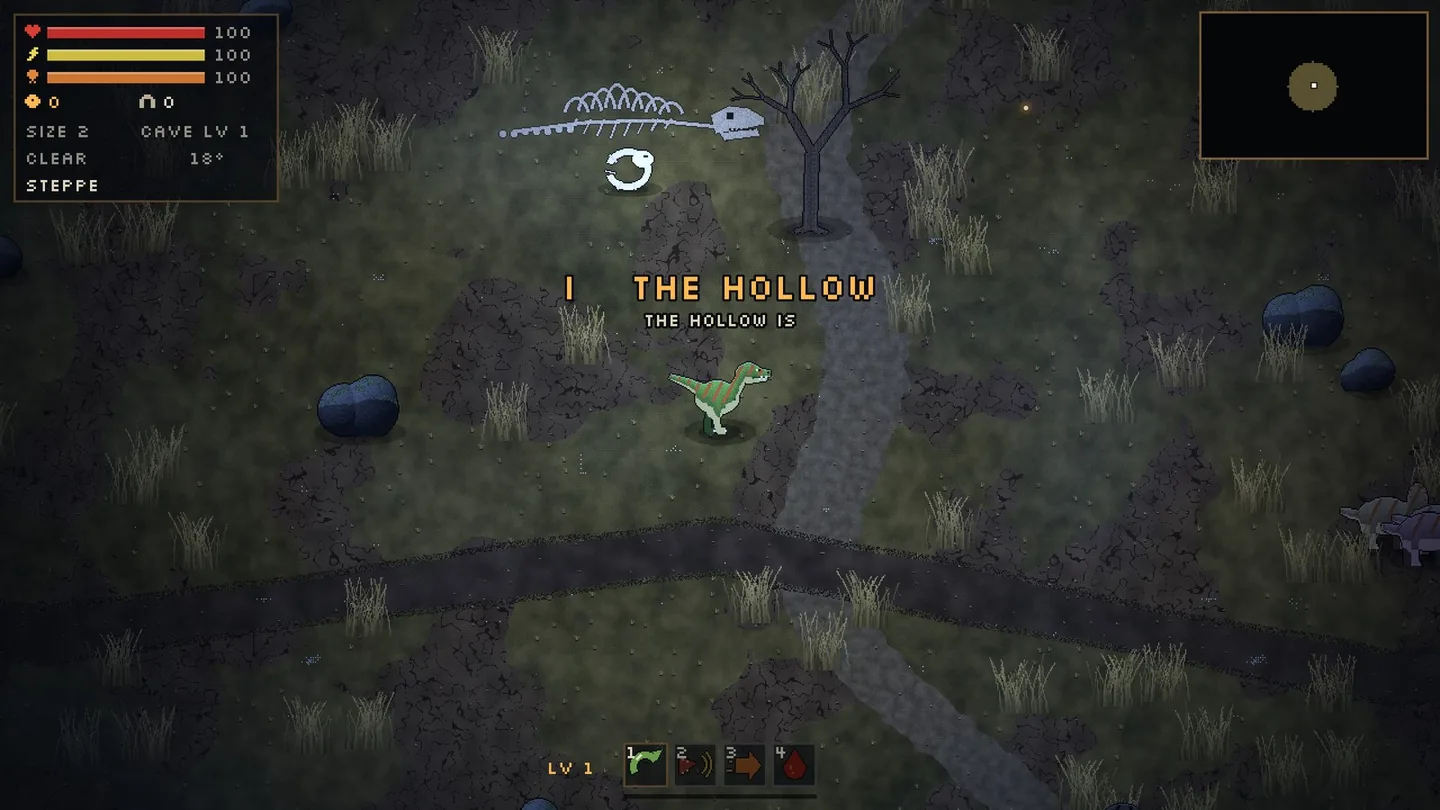
- World: jungle, river, swamp, steppe, volcano and snowfields, generated anew for every age, with day and night, weather, earthquakes and volcanic eruptions.
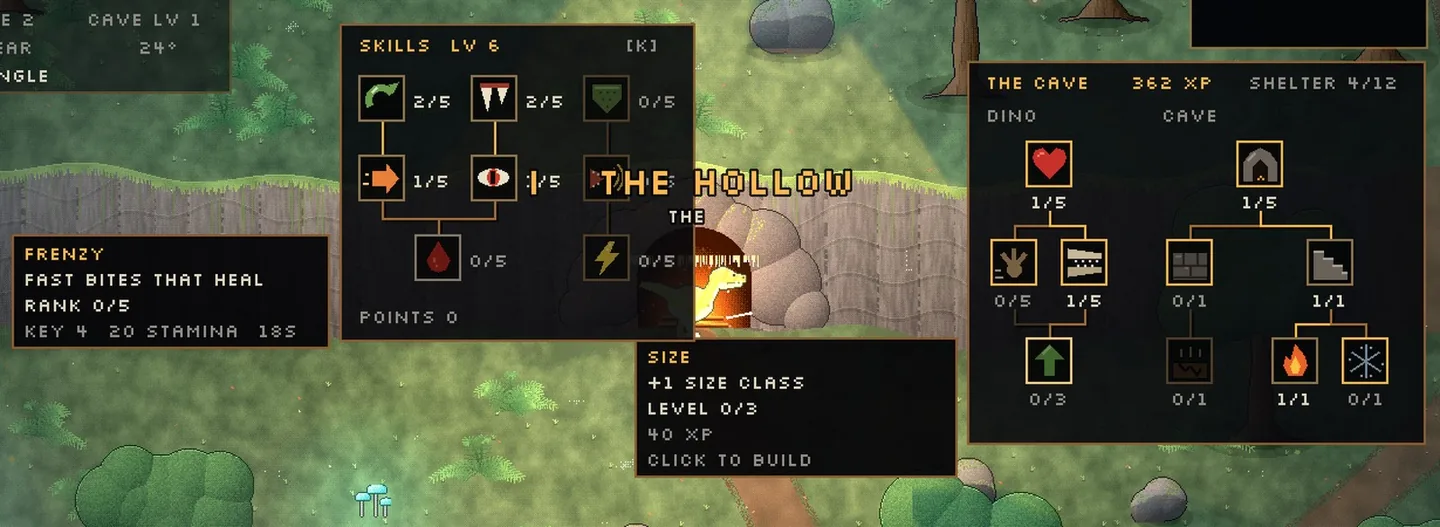
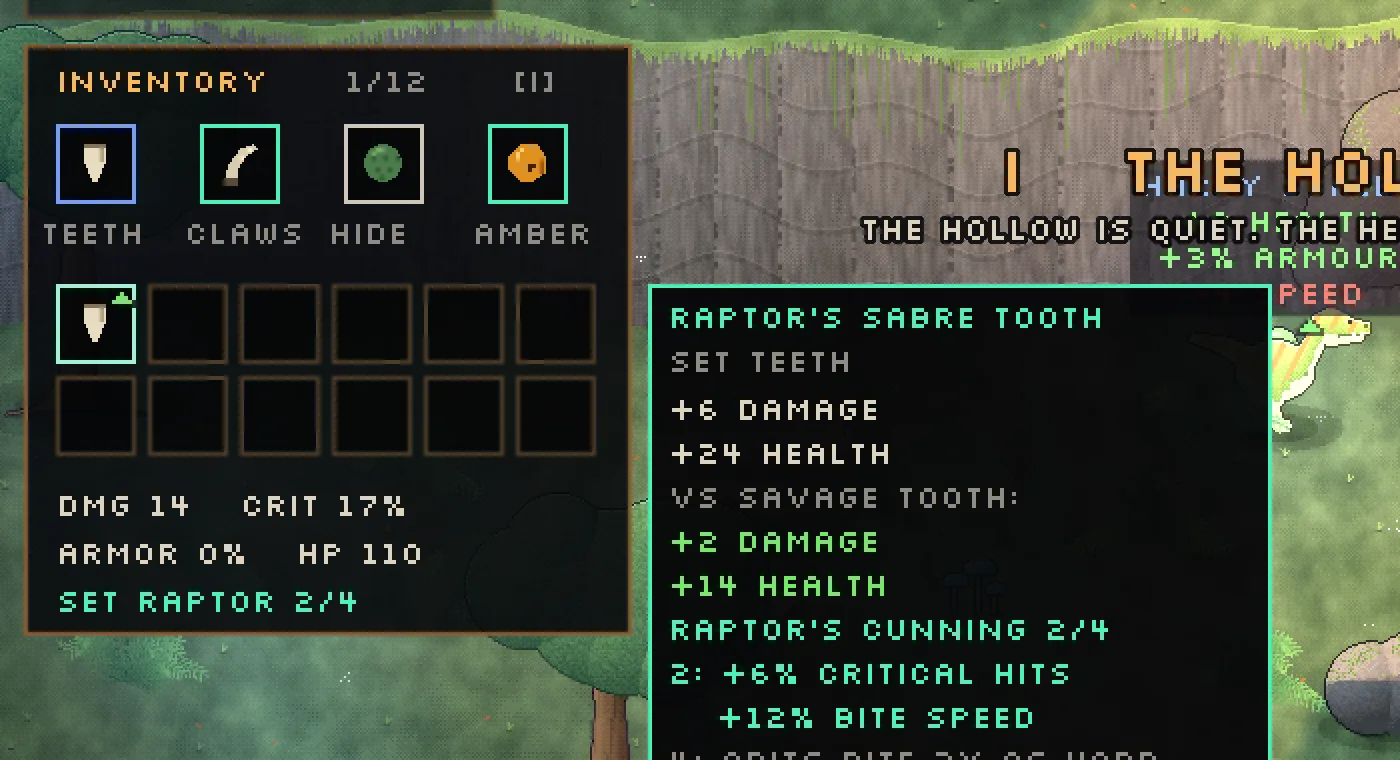
- Combat like Diablo: hit points, skills on keys 1–4, levels, a skill tree with threads, loot in four rarities and set items for your own builds.
- Story: an age lasts 50 minutes, the meteor grows in the sky, and only a well-built cave saves the dino.
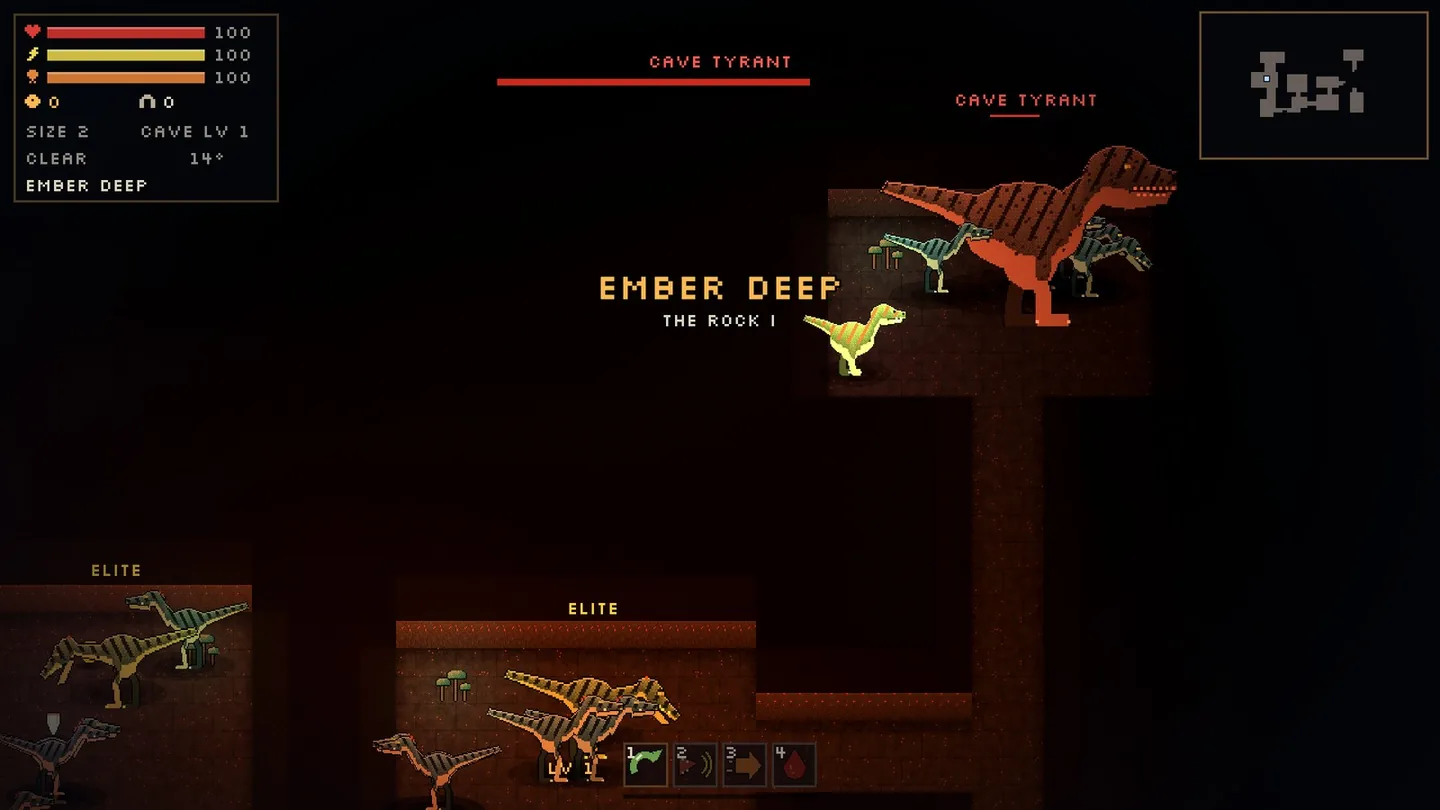
- Dungeons: random cave systems with elite animals and a boss.
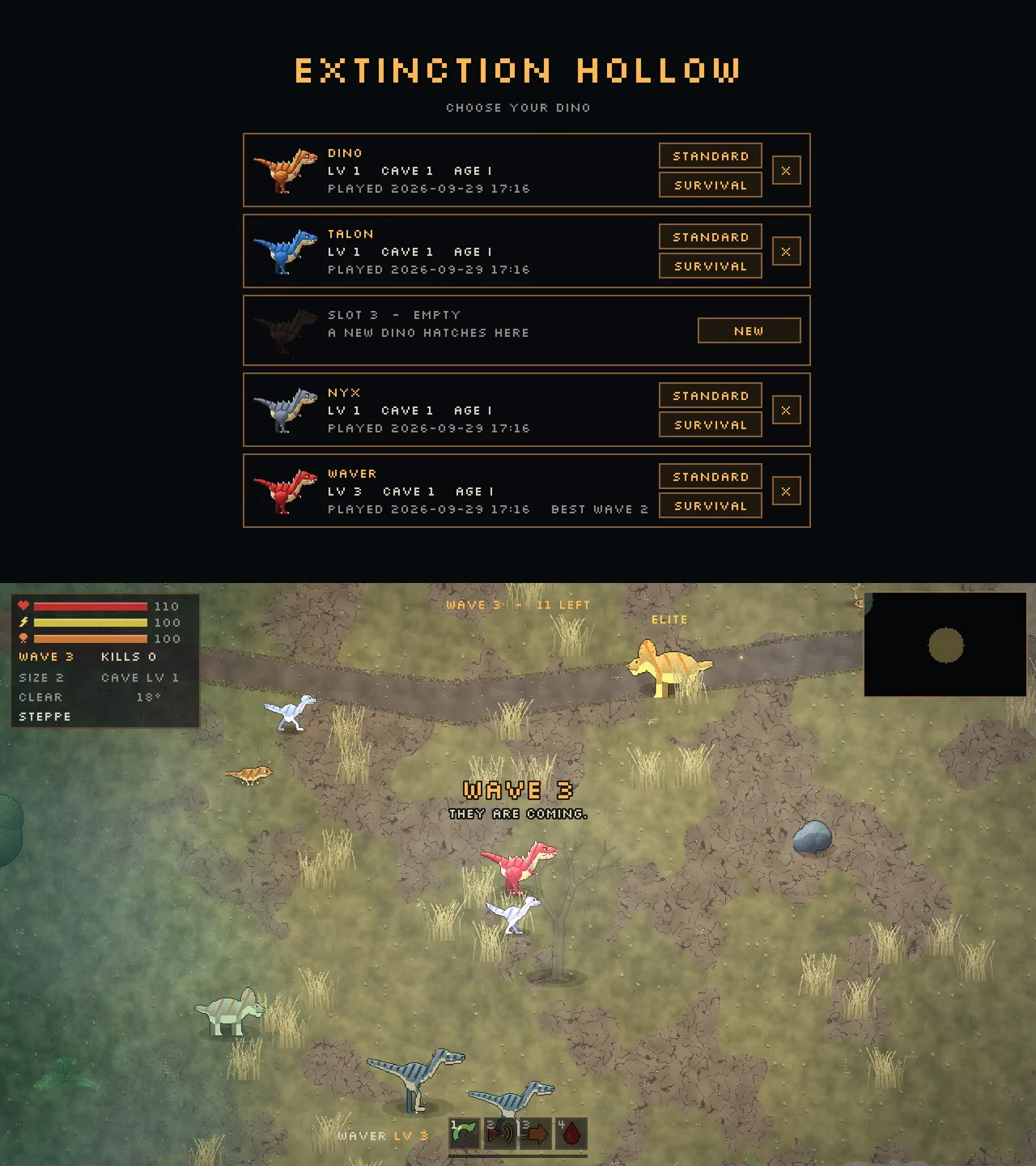
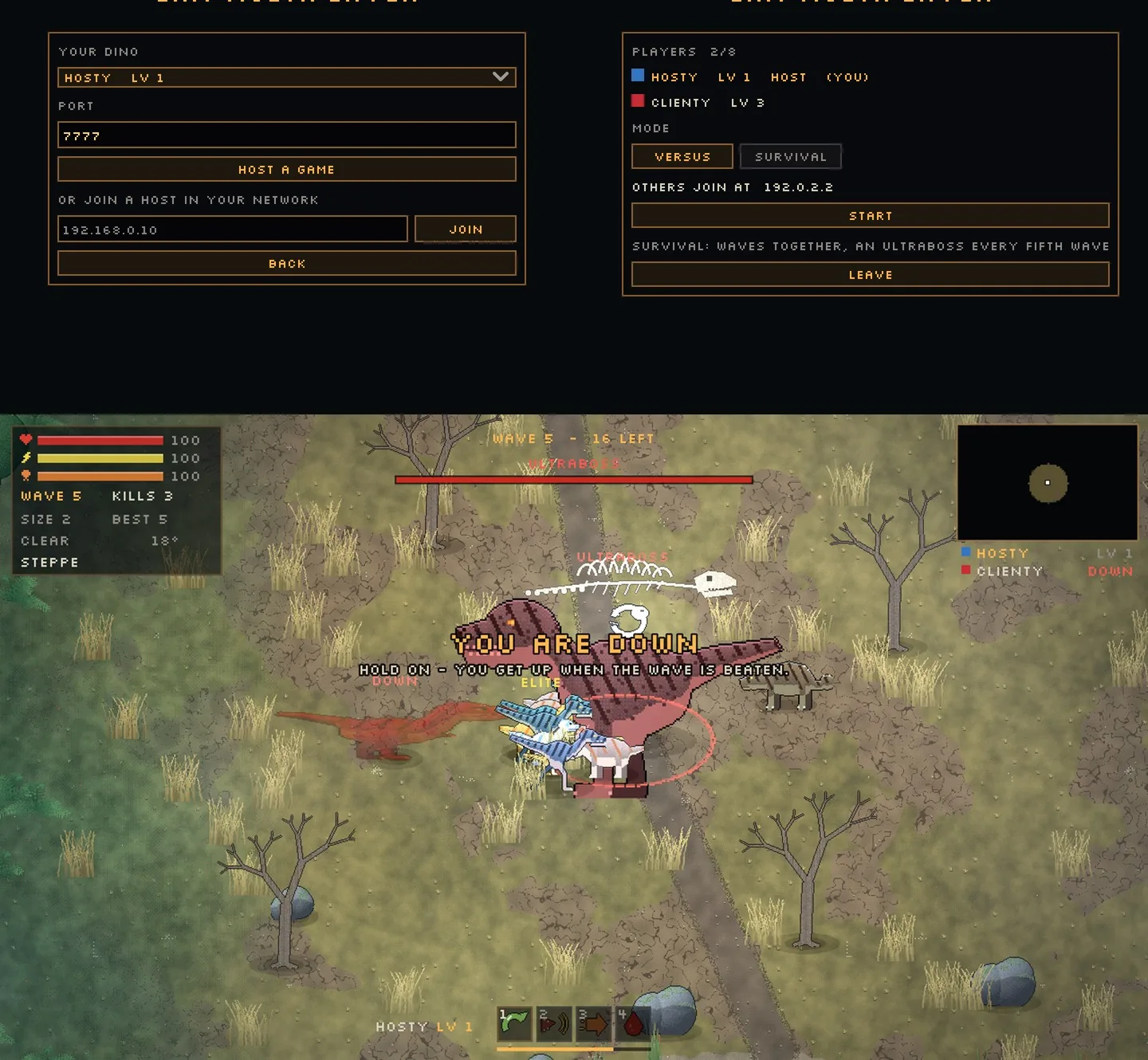
- Survival mode: monsters come in waves, with an ultraboss every fifth wave.
- Multiplayer: up to eight players on the local network, against each other or together against the waves.
- Everything generated: every graphic and every sound is produced by script, there is no bought asset pack.
Timeline: four days, ten stages
From the first commit on Sunday morning to multiplayer on Wednesday evening it is four days and ten merged pull requests. Each line is a stage that I then took over with a short “everything to main”.
| Day | Stage | What was added |
|---|---|---|
| Sun, 27 Sep | 1 | Game idea and specification, first prototype in Defold: click-to-move, hunting, cave |
| Sun, 27 Sep | 2 | Switch to Godot 4, dark graphics prototype, predator dino, ecosystem, upgrades and HUD |
| Sun, 27 Sep | 3 | Smoother animations, eating and attack movements, steppe in the east |
| Sun, 27 Sep | 4 | Weather, earthquakes and volcanic eruptions |
| Sun, 27 Sep | 5 | Pathfinding, different dino species, biomes: river, swamp, volcano, snow |
| Mon, 28 Sep | 6 | Rebuild into an action RPG, meteor story, automap, random dungeons and worlds, HD pixel art for 2560 × 1440 |
| Mon, 28 Sep | 7 | All sounds generated by script, specification brought up to date |
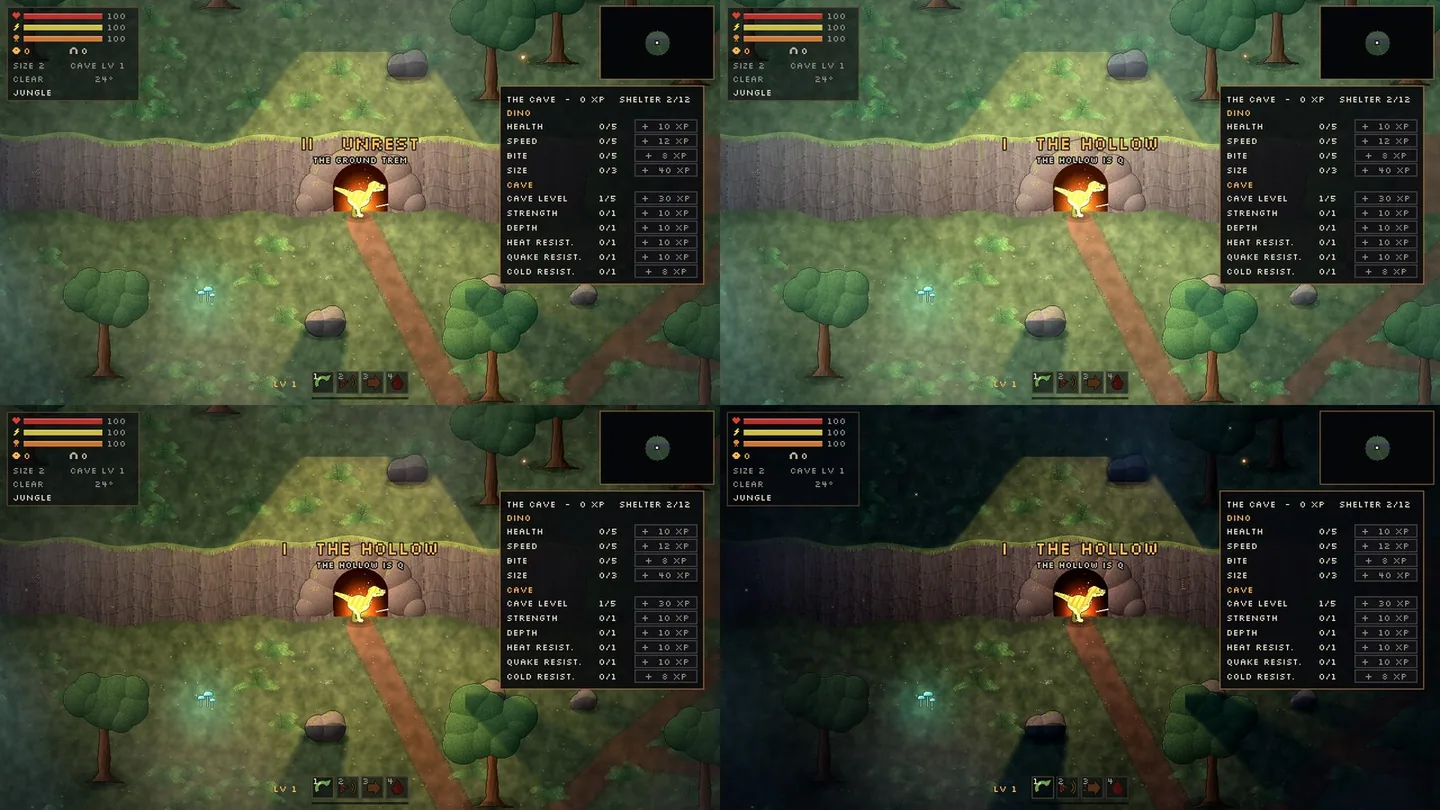
| Tue, 29 Sep | 8 | Item comparison, day-night cycle, skill tree with threads, set items, new hero dino, visible skill effects |
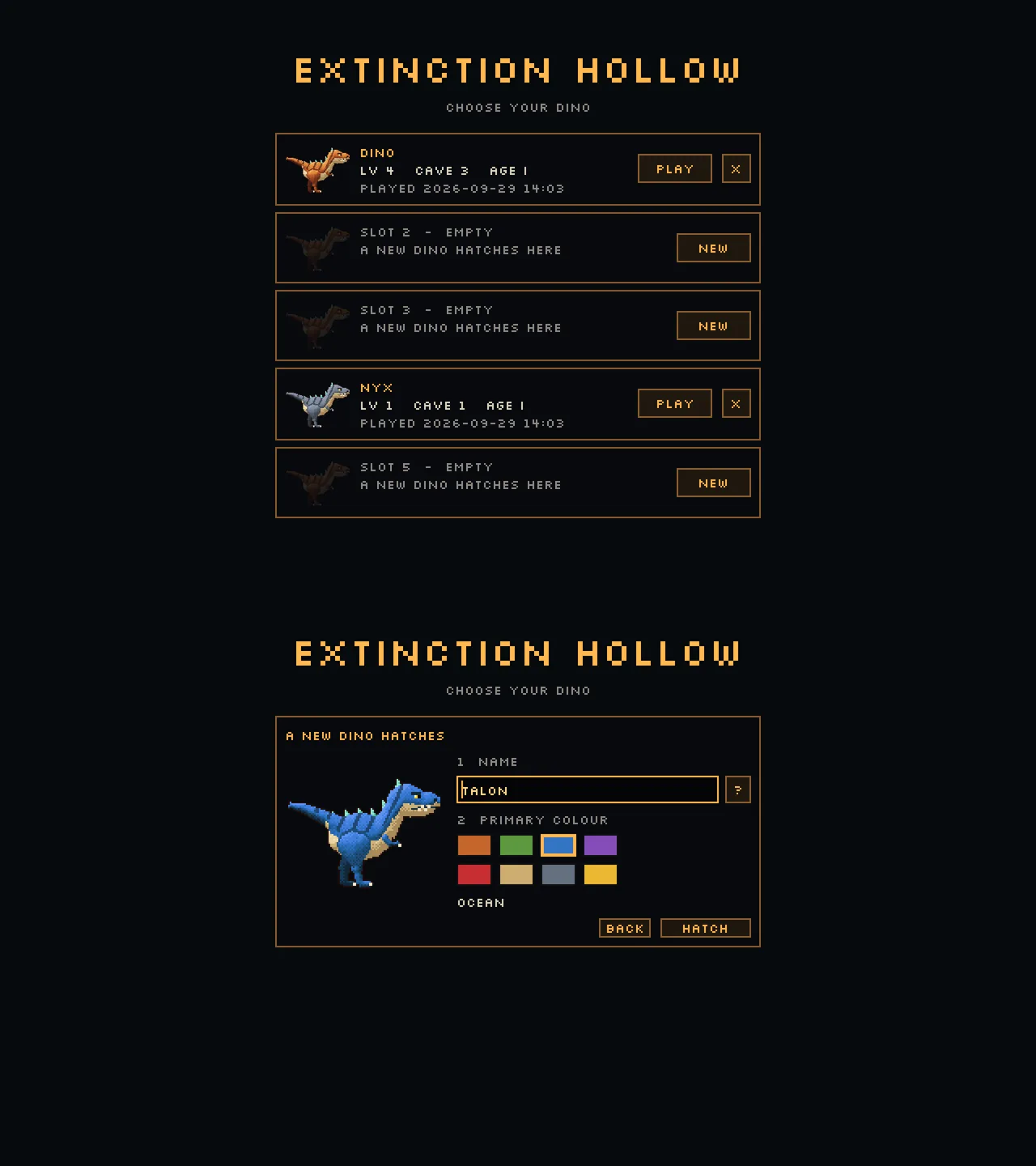
| Wed, 30 Sep | 9 | Five save slots with a setup wizard, survival mode |
| Wed, 30 Sep | 10 | Local-network multiplayer for up to 8 players: against each other or together against an ultraboss |
Gallery: what the game looks like today
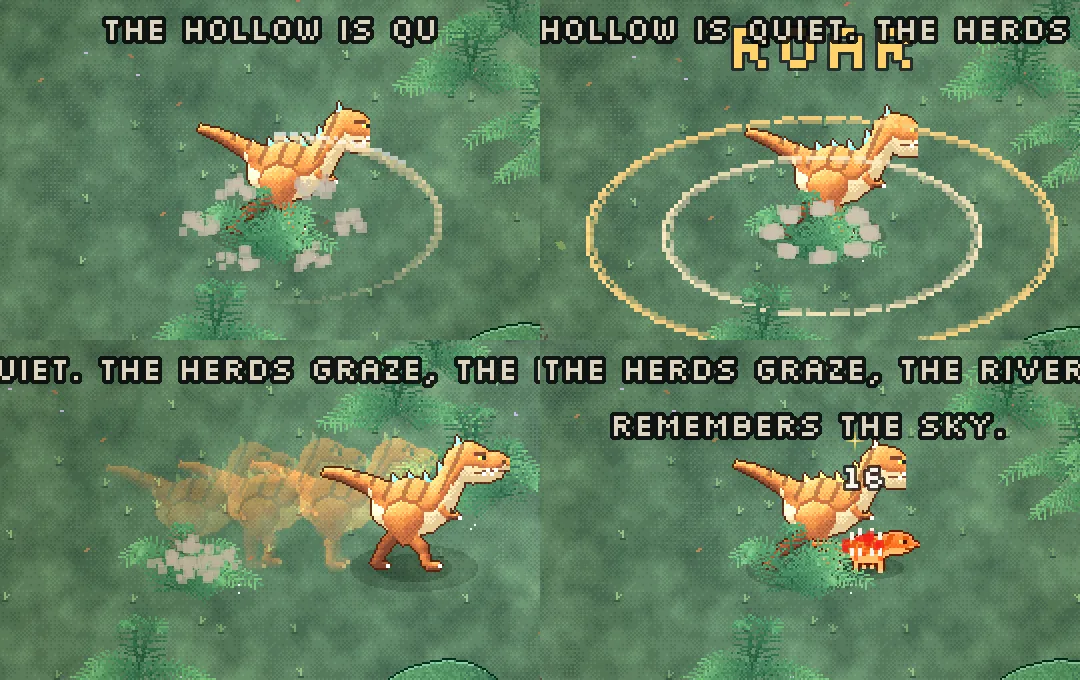
All images are real screenshots from the game, captured at 2560 × 1440. Every graphic and every sound in them was generated by script, there is no bought asset pack in there.

How we worked together
I did not write a single line of code myself. My role was that of a game designer with a very fast team: I say what I want and decide whether I like it.
A typical round looked like this:
- I write a wish, usually one or two sentences in German, often from my phone. For example: “Attacks should have a visible animation, like stomping or a tail swipe. Not as extreme as in Hades, but clearly visible.”
- Claude plans and builds. It reads the existing code, extends the specification and implements the change: scripts, shaders, graphics, sounds.
- Claude tests on its own. The game runs headless in the background, automated tests check combat, items, save slots and networking. After that the screenshots come to me.
- I look and react. If it fits, I write “everything to main”. Claude then opens a pull request on GitHub and merges it.
Not every idea survived. Multiplayer started out as Steam, then became the browser with its own server, and ended up as local network only. That was entirely fine: Claude asked what exactly I meant instead of just charging ahead, and removed the discarded ideas cleanly from the specification.
Another nice part: when I sent screenshots of other games such as Eastward, I got an honest assessment of what came down to the engine and what came down to the design. The answer was: keep the engine, improve the graphics. That is exactly what we then did.
In numbers
After four days the repository looks like this:
| What | Amount |
|---|---|
| Commits on main | 45 |
| Merged pull requests | 10 |
| GDScript files | 56 files, about 6,700 lines |
| Shaders (light, water, colours, effects) | 11 files, about 720 lines |
| Scenes | 33 |
| Generated graphics (PNG) | 44 |
| Generated sounds (WAV) | 12 |
| Graphics generator in Python | about 1,200 lines |
| Sound generator in Python | about 270 lines |
Specification (GAME_SPEC.md) | just under 5,000 lines |
| Automated tests | 171 in the main game, 49 for survival, save slots and items, 43 in the network test |
What surprised me most was the specification. It is the memory of the project: every new idea lands there first, with status and tasks. That way even a fresh session immediately knows where we stand.
Tokens used
The whole project ran in a single Claude Code session. Its log shows exactly how many tokens were used, including this blog post:
| Day | Written by Claude | Written to cache | Read from cache |
|---|---|---|---|
| Sun, 27 Sep | 610,000 | 1.08M | 119.1M |
| Mon, 28 Sep | 440,000 | 0.92M | 88.3M |
| Tue, 29 Sep | 234,000 | 1.85M | 60.6M |
| Wed, 30 Sep | 123,000 | 2.06M | 45.1M |
| Total | 1.41M | 5.91M | 313.1M |
Together that is roughly 320 million tokens across 815 requests to the model. The largest item looks dramatic but is the cheapest one: at every step Claude re-reads the conversation so far and the state of the project, and it does so from a cache that costs only a fraction. What Claude genuinely wrote anew was “only” 1.4 million tokens: code, shaders, specification, answers and this text.
I find the trend interesting: the most was written on the first day, because the game came into being from nothing. The last two days were about polish and multiplayer, and on the final day Claude wrote only a fifth of what it wrote on day one.
Tips: how to get the most out of the 250 dollars
What I would pass on to anyone who gets the credit, after these four days:
- Pick a project you enjoy. A game, an app for your club, a tool for the office. If you want it, you give better instructions and you stick with it.
- Start with a specification. Have Claude write down what is to be built first. It saves a lot of misunderstandings later and every new session can pick up from there.
- Work in small stages. Ten pull requests with one topic each beat one with everything in it. Every step stays manageable and can be rolled back.
- Ask for proof. Tests and screenshots after every step show whether something really works. It costs a few minutes and saves hours.
- Send examples. A screenshot of a game you like says more than three paragraphs of description.
- Set rules. I keep an AGENTS.md in the project: smallest change that solves the problem, no unnecessary rewrites, short answers. That is easy on the credit.
- Be clear about what stays. When a plan changes, say so explicitly, for example “the current game stays, the other ideas can go”.
Ideas for your own project
- A small game for the kids, with their own characters and names
- A website with a booking calendar for your business
- A script that handles tedious spreadsheet work automatically
- A tool that sorts invoices or receipts
- A prototype for the app idea that has been sitting in a drawer for years
Conclusion: I think this is great
Four days, ten stages, a playable dino action RPG with HD pixel art, its own sound, a skill tree, survival mode and multiplayer for eight players. A week ago I would have considered that a project of several months.
It is not perfect. I have not tested multiplayer with more than two players or on genuinely separate machines, and there is plenty left to do on balance and story. But the foundation is there, and building on it is fun.
The most important thing I learned: you do not need programming skills to build something real. You need an idea, clear wishes and the patience to look at every step. Claude does the rest.
If you got the credit too: give it a try. And write to me about what you made of it. I am curious.